Chair 03Salon Business
$22,000 and 36%: The Business Case for a Salon That Gives Back
Be Rosie Salon has raised $22,000-plus for schools since 2018, and 36% of fundraiser participants become regular clients — a giving model with measurable returns.
By Grace Kim
- Service
- Salon Business
- Chair
- No. 03
- Booked
- Length
- 3 min
Consultation notes
- Be Rosie Salon has raised more than $22,000 for local schools since opening in 2018.
- 36% of the salon's annual haircut fundraiser participants become regular clients.
- The salon's fundraiser systems took four years to build; the program has been refined over eight years.
- Claremont's downtown Village had a salon moratorium, limiting new openings to replacements.
- Two community programs, Community Class and Hair Happy Hour, ended due to team capacity.
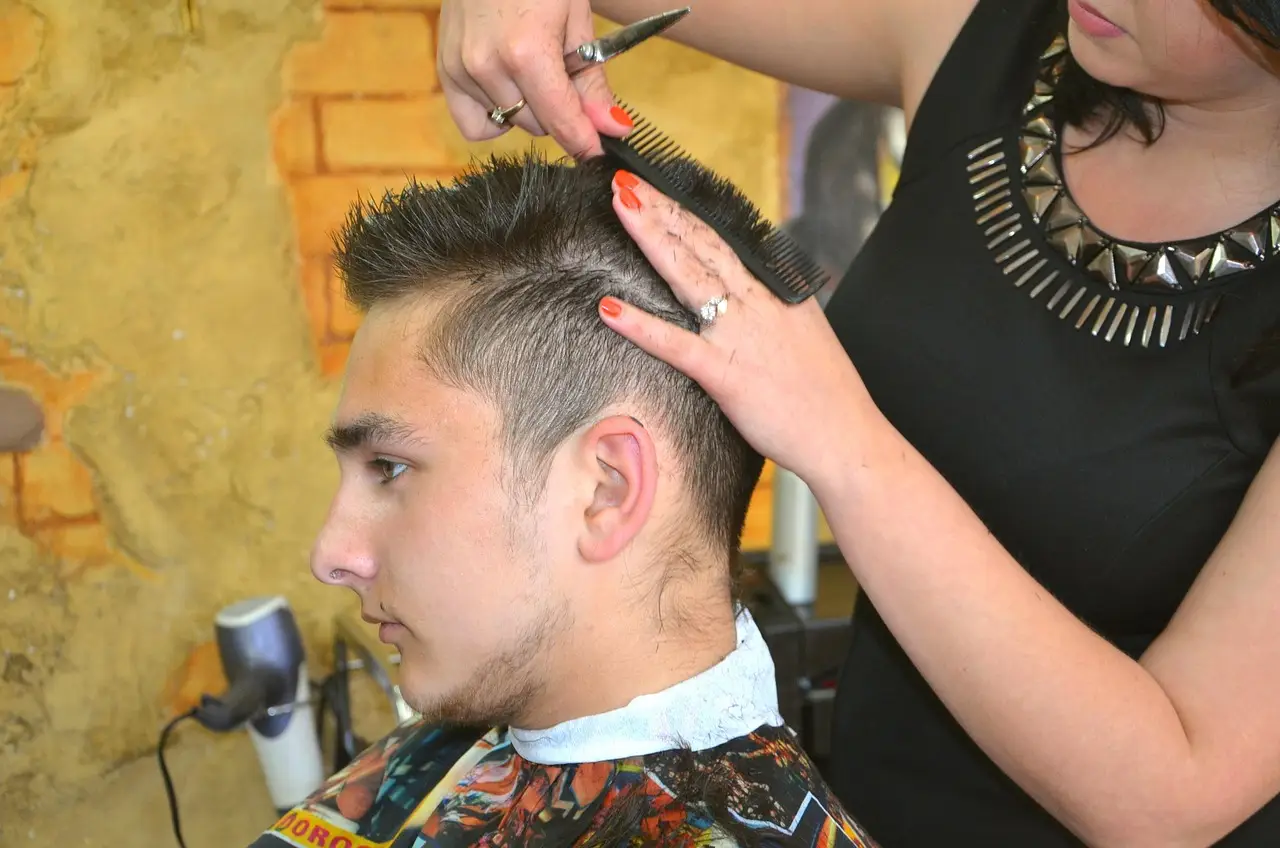
Be Rosie Salon has raised more than $22,000 for local schools since 2018, and 36% of the participants in its annual fundraiser convert into regular clients. Those two numbers, owner Anny VanDriel argues, are the measurable return on a strategy built for a market that had stopped accepting new entrants.
When VanDriel opened her Claremont, California salon in 2018, the downtown Claremont Village had a moratorium on new salons: a salon could only open by replacing an existing one. She located outside the Village instead, in an area with just three salons, and made hers the fourth. Rather than compete on price or décor in a saturated market, she built differentiation around community giving.
The impulse predates the business. As a teenager, VanDriel volunteered at a hospital, wheeling patients and running samples to the lab. In her 20s she served as a Big Sister, cut hair for children at the Child Crisis Center, and later moved on to animal shelters and fostering puppies. "Giving back has always been important to me," she writes in a first-person account of her salon's approach.
What does the giving program actually look like?
Be Rosie Salon runs three standing initiatives:
- Annual Haircut Fundraiser. The salon's biggest give and its largest new-client generator. One Sunday a year, the team cuts hair for five hours and donates all proceeds to the Claremont Educational Foundation, a nonprofit that funds grants to local schools. The cumulative total now exceeds $22,000, and 36% of fundraiser participants become regular clients.
- Crossroads Giving Tuesday. The team's favorite event. Crossroads Inc. supports women transitioning from prison, and on Giving Tuesday the salon invites them in for hair makeovers before job and housing interviews. The relationship now runs year-round: women entering the program connect with the salon for individual hair services as needed.
- Product Donation Drive. The simplest initiative. Each spring the salon collects gently used hair products for local women's shelters, Crossroads and community members who pass them along.
The conversion figure matters for any owner weighing the cost of donated chair time. A five-hour fundraiser that feeds roughly one in three participants into the client base functions less as charity expense and more as acquisition spending with a community benefit attached.
Which programs did the salon cut?
Not everything survived. A free Community Class taught clients blow-drying, simple updos, braiding for teens and hot-tool waves for an hour on Sundays. A lighter Hair Happy Hour offered Friday-afternoon snacks, bang trims, raffles and tutorials during business hours. Both ended because of team capacity: VanDriel taught the classes herself, and Happy Hour required a dedicated host. Her team consists entirely of hairdressers, so neither role could be sustained.
The lesson she draws is operational, not sentimental. Where full team support is required, as with the fundraiser, she recruits outside stylists to fill the chairs and budgets for lower-than-expected internal participation.
How should another salon start?
VanDriel's advice is deliberately incremental. Keep it local, choosing organizations clients already care about. Start with one organization and one initiative. Start with the simplest version of an idea and refine it afterward — the fundraiser's systems took four years to build. Set realistic team expectations for volunteer work. Publicize the program, because, as she notes, some clients make buying decisions based on aligned values; her website carries a dedicated page on the salon's giving.
She has been refining the program for eight years, taking notes after each event and adjusting the following year. "A salon doesn't have to be just a salon," she writes. "Hairdressers by nature are givers."
The next data point worth watching is the fundraiser's 2026 total, which will indicate whether the 36% conversion rate holds as the event enters its ninth year.
via Modern Salon (Source)
More from Grace Kim
Show full bio
News editor covering regulation, policy and their impact on professional hair industry at Chairside Brief.
49 articles
Next in the book · Related articles
End of record · 3 min read