Chair 10Salon Business
Burglars Smash Through Wall to Steal $10K in Clippers from San Antonio Barbershop
San Antonio barbershop owner says burglars smashed through the wall of the next-door storefront and stole about $10,000 in clippers and supplies — a loss that idles chairs, not just inventory.
By Amara Osei
- Service
- Salon Business
- Chair
- No. 10
- Booked
- Length
- 3 min
Consultation notes
- Burglars entered by smashing through the wall of the storefront next door, per the barbershop owner
- Stolen items were clippers and supplies valued at approximately $10,000
- The break-in occurred at a barbershop in San Antonio, Texas; police investigation is ongoing
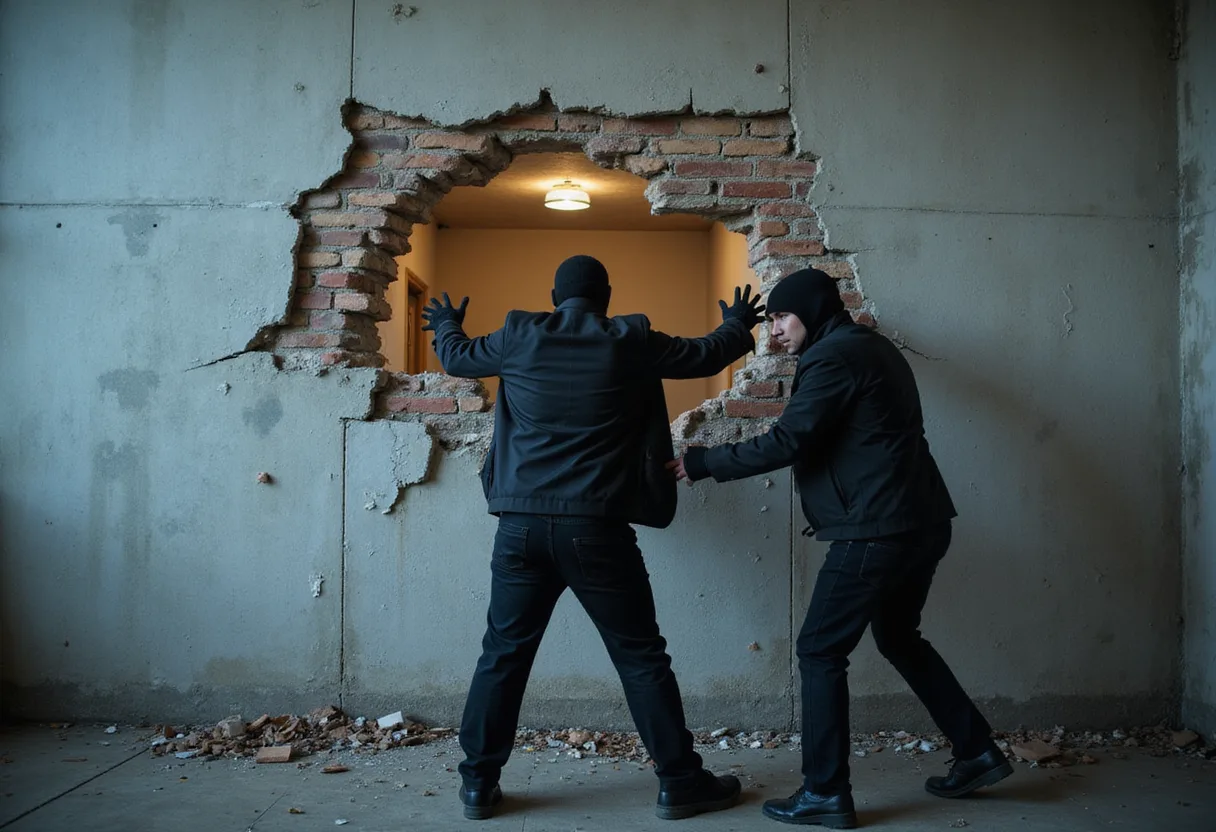
Burglars stole roughly $10,000 in clippers and supplies from a San Antonio barbershop after smashing through the wall of the storefront next door, according to the shop's owner.
The owner says the thieves did not force the front door or a window. Instead, they entered the neighboring storefront and broke through the shared wall, reaching the barbershop's interior directly. The haul, per the owner, was clippers and supplies valued at about $10,000.
The method matters for every salon and barbershop operator reading this. A reinforced front door, cameras over the entrance, and a good alarm contract do nothing when the point of entry is a wall. Shops that sit adjacent to vacant retail units — and in many commercial strips, vacancy rates make that common — share a structural vulnerability that standard security planning rarely addresses.
The loss figure also deserves attention from a business-continuity standpoint. Ten thousand dollars in clippers and supplies is not a single large capital item; it is the working toolkit. Professional clippers, trimmers, and blades are high-value, easily portable, and readily resalable — a combination that makes barbershops a repeat target for opportunistic burglary. When the tools walk out the door, the chairs stop producing revenue the next morning. Every hour a barber cannot work is an hour of lost service income stacked on top of the replacement cost.
Replacement is not an overnight fix either. A working barber may need several hundred dollars' worth of equipment per station — clipper, trimmer, guards, blades, disinfectant supplies — and rebuilding a full shop's inventory at $10,000 means either a large one-time cash outlay or a phased restart that leaves some chairs dark.
For owners reviewing their own exposure, the San Antonio case suggests three practical checks. First, identify what sits on the other side of every wall, not just the doors and windows. A vacant unit, a storage room with lax security, or a shared wall in poor repair is an entry route. Second, confirm whether the insurance policy actually covers tools and supplies at replacement value, and whether there is a deductible that turns a $10,000 loss into a much larger net hit. Third, ask whether the alarm system includes interior motion sensors positioned deep in the shop — not just perimeter contacts — so that entry through an unexpected breach point still triggers a response.
Inventory discipline helps as well. Owners who keep a current, photographed list of serial numbers for clippers and other equipment give police a concrete lead and give insurers a cleaner claim. In this case, the owner has gone public with the loss; whether any of the stolen tools are recoverable will depend heavily on whether they can be identified.
San Antonio police are the agency handling the report, and the investigation is ongoing. The owner's account of the wall breach is the central detail, and it reframes what "shop security" means for a trade where the most valuable assets are small enough to carry out in a bag.
Watch for whether arrests follow and whether the adjoining property's ownership or vacancy status becomes part of the legal aftermath — liability questions around shared walls tend to surface in cases like this one.
via Google News - Barbershop Business (Source)
More from Amara Osei
Show full bio
Senior reporter covering companies, deals and strategy in professional hair industry at Chairside Brief.
48 articles
Next in the book · Related articles
End of record · 3 min read