Chair 09Salon Business
Denver Developer Seeks $250K to Convert Brewery Into Salon Suites
Developer Jay Soneff has applied for a $250,000 DDDA loan to redevelop the former Jagged Mountain Brewery at 2000 Lawrence Street in downtown Denver into a multi-tenant salon suite complex for independent beauty and wellness operators.
By Amara Osei
- Service
- Salon Business
- Chair
- No. 09
- Booked
- Length
- 3 min
Consultation notes
- Developer Jay Soneff seeks a $250,000 loan through the Denver Downtown Development Authority.
- Project site: 2000 Lawrence Street in Denver, most recently home to Jagged Mountain Brewery.
- Plan: convert the brewery footprint into a multi-tenant salon suite complex.
- Tenants would be independent cosmetology, esthetics, nail, and barber operators.
- Reported by Jenna Barackman in the Denver Business Journal on August 21, 2026.
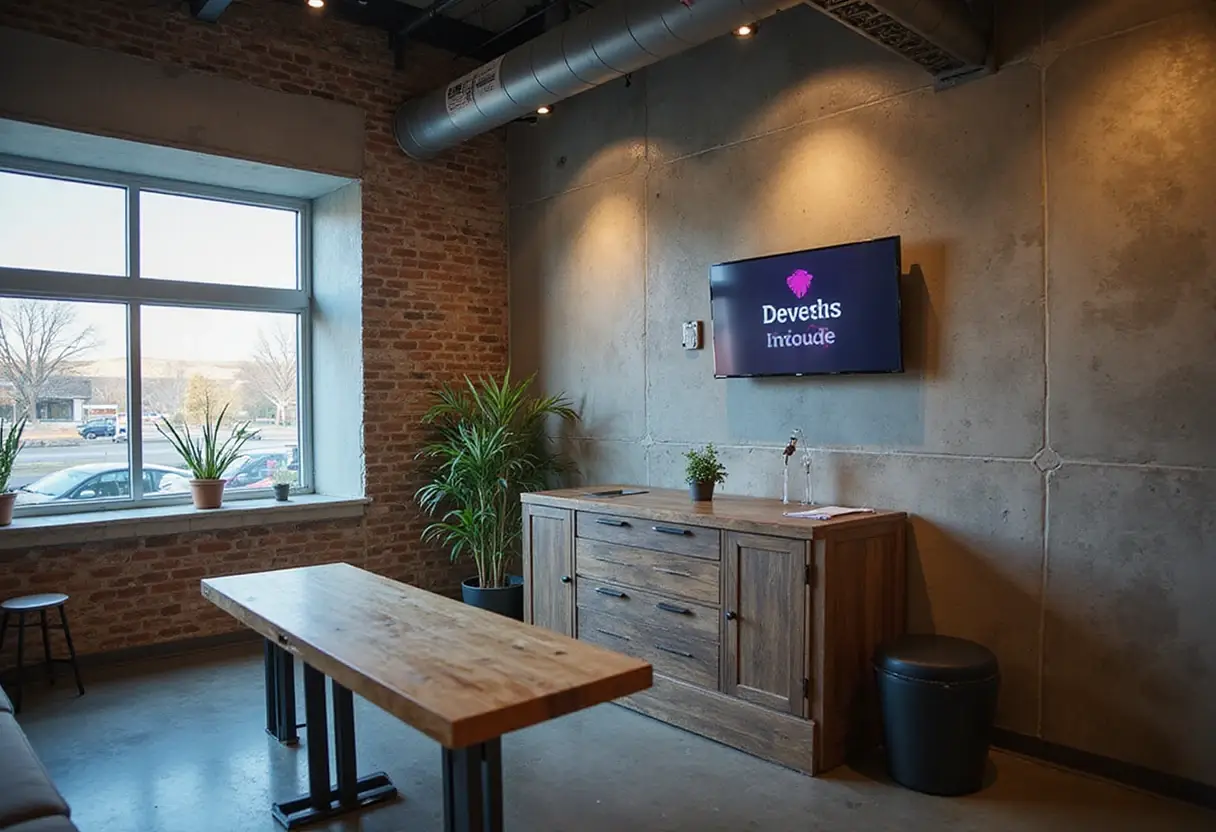
A longtime Ballpark-area developer is seeking a $250,000 loan to convert a vacant downtown Denver building into a salon suite complex, the Denver Business Journal reported on August 21, 2026.
The application targets the former Jagged Mountain Brewery at 2000 Lawrence Street. The developer is Jay Soneff, a Ballpark-district owner-operator whose financing request references the Denver Downtown Development Authority (DDDA).
Reporter Jenna Barackman, who covers commercial real estate for the Business Journal, broke the story Thursday. The full article sits behind a subscriber paywall.
What sits at 2000 Lawrence today?
The Lawrence Street parcel most recently operated as Jagged Mountain Brewery before the tenant vacated. The block sits a short walk from Coors Field, between the Ballpark neighborhood and the Central Business District — two submarkets the Business Journal has tracked through 2025 and 2026.
The building remains empty, a pattern the Business Journal has reported across downtown Denver as small-format commercial and former restaurant space absorbs into alternative uses.
What is Soneff's plan?
The loan, if approved, would fund conversion of the brewery footprint into a multi-tenant salon suite complex. Independent cosmetology, esthetics, nail, and barber operators would each lease a finished, lockable room directly from the property owner.
Tenants would operate as standalone businesses — setting their own prices, keeping their own client books, and retaining 100 percent of service revenue. The salon-suite model removes the commission split and shared back-of-house costs that define a traditional employed-stylist salon.
What does the model mean for operators?
For a working stylist weighing the move, the trade is direct.
A commission-based stylist at a full-service salon keeps a percentage of service revenue while the salon absorbs rent, reception, and consumables. A suite-based operator flips that arrangement: rent is fixed and weekly, utilities and supplies are tenant-paid, and every dollar of service revenue flows to the operator.
The economics depend heavily on chair utilization, a risk vector for suite tenants who do not bring a built client base when they switch.
What's the trade context?
For salon owners and independent operators evaluating similar projects, the structure carries predictable implications:
- License hand-off. Property owners typically do not assume operator licensing; each tenant must hold or qualify for the relevant state cosmetology, esthetics, or barber license.
- Build-out line. The $250,000 figure is a project-level loan, not a per-suite subsidy; tenant improvements, equipment, and consumables remain tenant-paid.
- Foot traffic. Interior-corridor suites rarely generate walk-ins; operators dependent on new-client acquisition must plan marketing budgets independently.
- Compliance lift. Zoning, plumbing, and ADA accessibility minimums for cosmetology uses vary block by block, which is why a local developer's track record carries weight in lease-up.
- Adaptive reuse. Converting a former hospitality tenant to a licensed cosmetology use typically requires new plumbing runs, ventilation upgrades, and re-inspection of fire-suppression systems — items a working owner should expect on the project-cost ledger.
What happens next?
Soneff's $250,000 financing request now sits with the Denver Downtown Development Authority. The Authority publishes a meeting calendar on its website; the next scheduled hearing is the next concrete data point to watch.
A positive vote would unlock building permits and tenant pre-leasing at 2000 Lawrence Street. Until then, the former Jagged Mountain Brewery remains a tracked downtown vacancy with a defined milestone ahead.
via bizjournals.com (Original)
More from Amara Osei
Show full bio
Senior reporter covering companies, deals and strategy in professional hair industry at Chairside Brief.
48 articles
Next in the book · Related articles
End of record · 3 min read