Chair 06Cutting & Education
Burst Fades and Gender-Fluid Cuts: What Is Driving Short Hair Demand
The burst fade was the most popular cut at this year's World Cup — about 40 per cent of some teams wore it. Jansen and Ramos explain the techniques behind the short-hair surge.
By Nathan Brooks
- Service
- Cutting & Education
- Chair
- No. 06
- Booked
- Length
- 4 min
Consultation notes
- Jansen estimates roughly 40 per cent of some World Cup teams wore the burst fade
- Scott Ramos uses a number five guard against the grain and an Andis Recon Clipper on coarse, loosely curled hair
- Jansen favors grown-out blondes at three to five weeks for maximum depth against a fade
- Ramos identifies the perfect oval as the ideal face shape and prescribes extra length at the parietal area for protruding mastoids
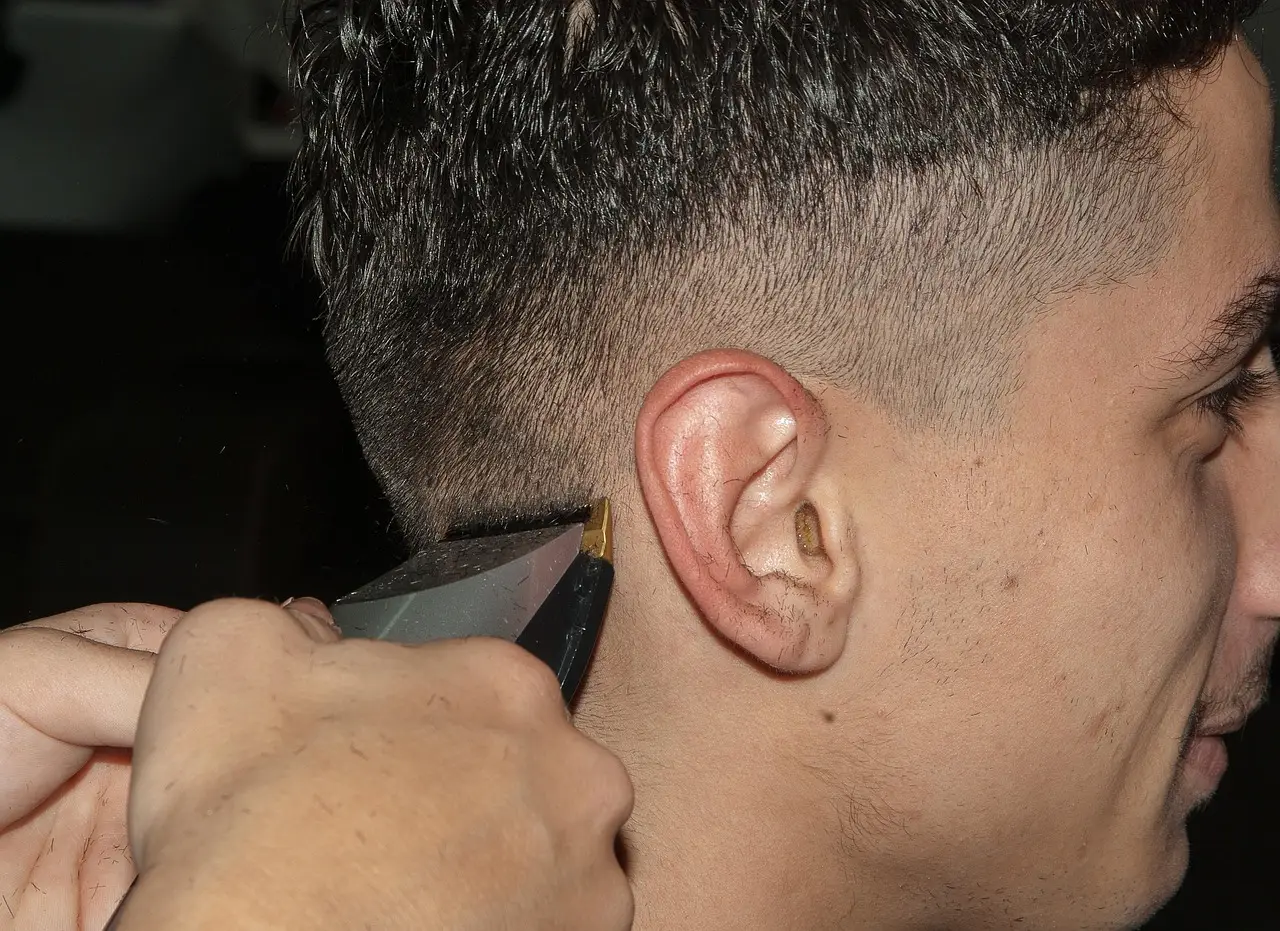
The burst fade — an extension of the mullet that wraps around the ear rather than fading only at the temple — is the single most requested short cut in Darren Jansen's chair, and the most popular haircut seen across this year's FIFA World Cup games. Jansen, a short hair expert at Pomme Salon Toronto and a L'Oréal Professionnel ambassador, estimates its reach bluntly: "If you look at one football team, it's like 40 per cent of the team rocking this haircut."
For salons, the trend carries a service-mix implication. Clients moving on from mullets want continuity, not a reset. "This is a very nice and natural transition from clients that were rocking some level of a mullet," Jansen says. "It's something that's familiar, but also enough of a change that they feel like it's a progression."
How does gender-fluid cutting actually work?
Jansen frames it as a two-step method built on technical mastery. "Hairstylists can create more gender-fluid haircuts by first understanding the parameters of binary shapes," he says. "The next step is allowing themselves the freedom to deconstruct the shapes and cater them to the individual."
The payoff is retail-adjacent: broader competency widens the menu. "If you're proficient at creating all shapes in haircutting, it gives you the most amount of options to offer your clients," Jansen says. "Whether they're binary or non-binary, it's important to make sure that the individual feels the most confident when they leave your chair."
What face shapes suit these cuts?
Scott Ramos, founder of Saint Barbershop in Winnipeg and a global educator working with Andis and STMNT, identifies the perfect oval as the ideal face shape for short cuts. "You kind of want to try to manipulate the hair so it brings the face closer to that oval," he says.
Head shape matters as much as the face. For clients whose mastoids (the bone behind the ear) protrude and narrow the head to a point, Ramos keeps more length near the parietal area (the upper side panels of the head) to build a boxier silhouette.
Jansen builds every customization on a detailed consultation covering texture, density, lifestyle and comfort level.
Which techniques prevent bad fades?
Ramos warns against the hard-line method popularized in viral barbering videos. "Creating hard lines will create hard times," he says. "A fade is a series of lines, so a lot of people, especially those in viral videos, feature barbers going in and just drawing in, turning the trimmer around, and really pressing in these bald lines. It looks really cool on video, but if you don't know how to remove these lines properly, then your fade is going to have hard lines."
Jansen sequences his work differently: scissor-over-comb first, clippers second. "I think of fading as debulking, and I can add the shape there after I figure out the way I want it to look," he says.
Ramos's line-removal protocol:
- Work with the clipper lever open, positioning a finger's width above the initial guideline, parallel to it
- Slowly close the lever and fade downwards until the first line disappears
- Alternatively, use a number one guard open and remove the line by fading downwards
How do barbers build speed on textured hair?
Repetition is the training mechanism. Ramos rates mannequin work as useful but rates live practice higher. "That way, they can take the techniques and tips that we show them in person and be able to apply them," he says. "After that, it's really just about putting in the reps."
His technique varies by texture. For Brady Oliveira — lead running back for the CFL's Winnipeg Blue Bombers — Ramos cuts the coarse, loosely curled top with a number five guard against the grain. "Then, for the sides, I use my Andis Recon Clipper," he says.
Where does colour fit in?
Colour is functioning as an add-on service on faded cuts. Ramos continues to see men lightening and toning to cooler shades, often paired with buzzcuts. "What I've seen the most is guys just getting some highlights when they wear that nice, natural middle part," he says. "Or some guys with loose curls will put in what looks almost like frosted tips."
Jansen reports demand for vanilla blondes, sand and beige tones, and shades that read "naturally unnatural." His timing insight has booking value: he prefers a grown-out bleach or global blonde at three to five weeks, when darker roots show against the lightened lengths. "When you toss the fade in on that, the depth you get between that lightness of the skin coming into the fade is so dynamic," he says.
For clients new to clipper work, Jansen recommends a low-commitment entry point: "A neck taper on a pixie haircut or a peek-a-boo undercut is a great way to introduce clipper work to someone who may never have considered it otherwise."
The World Cup effect gives the trend a measurable shelf life — watch whether burst fades hold their share of short-cut requests through the fall booking season.
via salon-media.s3.ca-central-1.amazonaws.com (Original)
More from Nathan Brooks
Show full bio
Market editor covering companies, deals and strategy in professional hair industry at Chairside Brief.
46 articles
Next in the book · Related articles
End of record · 4 min read