Chair 03Cutting & Education
Curl Typing Is Not Enough: Grimley Breaks Down Textured Hair Science
Chris Grimley of Fusion Hair Co. says porosity, density, strand thickness and elasticity — not curl type alone — should drive how stylists consult, cut and prescribe for textured hair clients.
By Rebecca Stone
- Service
- Cutting & Education
- Chair
- No. 03
- Booked
- Length
- 3 min
Consultation notes
- Curl typing systems such as 2A, 3C and 4C do not fully predict hair needs, says Chris Grimley of Fusion Hair Co. and Texture Curl Academy
- Curl shape is determined by follicle geometry: round follicles produce straight hair; oval or asymmetrical follicles produce curls and coils
- Four factors — porosity, density, strand thickness and elasticity — govern how textured hair responds to products
- "When it comes to textured hair, moisture isn't a luxury. It's a necessity," Grimley says
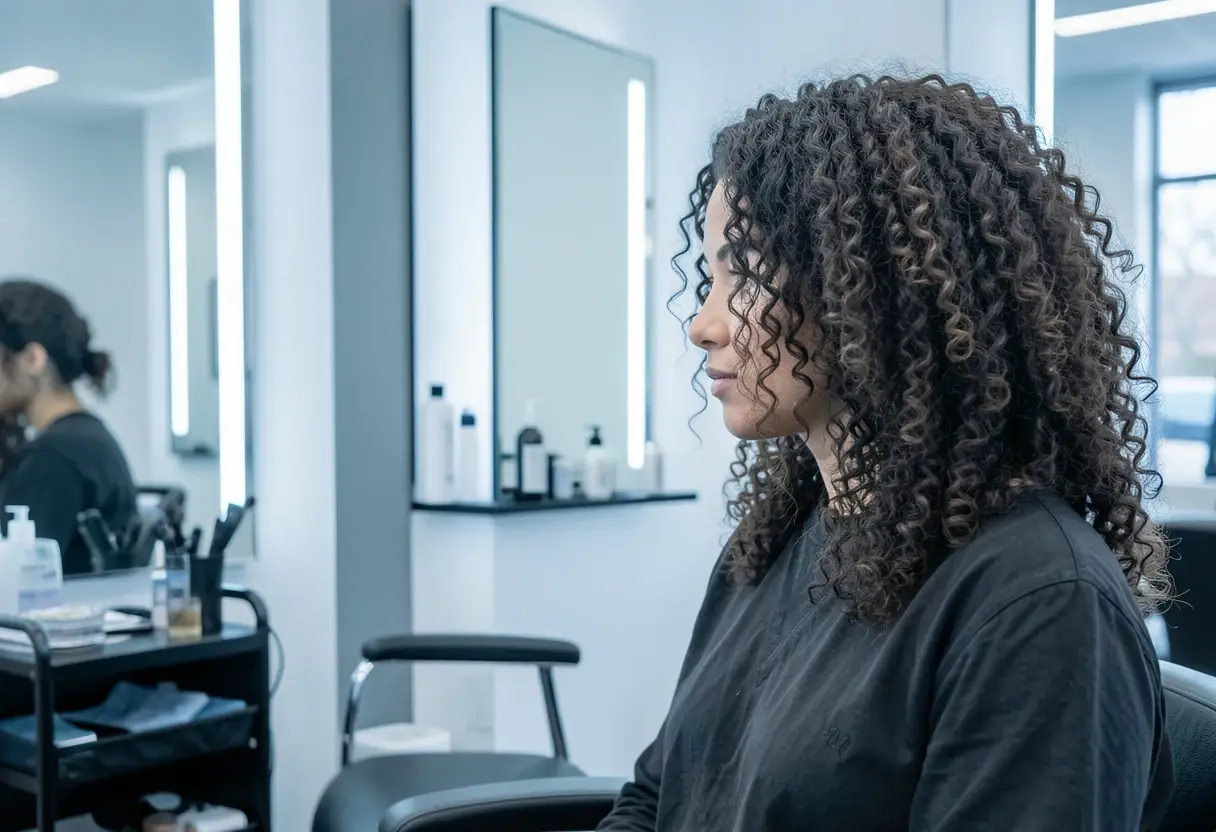
Curl typing systems such as 2A, 3C and 4C are useful starting points, but they do not tell the whole story, according to Chris Grimley, textured hair specialist and owner of Fusion Hair Co. and Texture Curl Academy. Clients who share the same curl pattern can have completely different hair needs, which changes what stylists should sell them and how they should handle them in the chair.
Grimley's message to working stylists is simple: assess the hair, not the label.
Where do curl patterns actually come from?
Curl pattern is set by genetics, the shape of the hair follicle and the structure of the hair fibre itself. Straight hair generally grows from rounder follicles. Curly and coily hair tends to grow from more oval or asymmetrical follicles, and those differences control how the hair bends and curves as it grows.
Structure has practical consequences behind the chair. Textured hair can be more vulnerable to damage in certain areas, which is why gentle handling, careful detangling and appropriate styling techniques matter for maintaining hair health.
Grimley's advice: consider the natural structure of a client's hair when choosing cutting, detangling and styling techniques, because a gentle approach minimizes unnecessary stress and breakage.
What should stylists assess beyond curl type?
Four characteristics, according to Grimley, and each one changes the product recommendation:
- Porosity — how readily hair absorbs and retains moisture
- Density — how much hair grows across the scalp
- Strand thickness — the diameter of individual fibres
- Elasticity — how well hair stretches and returns to shape
Together these determine how hair responds to products and styling methods. A consultation that measures these alongside curl pattern will produce better product selection, styling decisions and at-home care advice. Two clients with similar curls may need very different routines.
Why is moisture the non-negotiable?
The scalp produces sebum, which lubricates and protects hair. The bends and curves of curly and coily hair make it harder for that sebum to travel from root to end, leaving lengths and ends prone to dryness.
"When it comes to textured hair, moisture isn't a luxury. It's a necessity," says Grimley.
His routine recommendation runs hydrating shampoos and conditioners first, followed by styling products such as curl creams, gels or mousses to condition the hair, enhance definition and provide hold. The target is moisture and manageability without weighing the hair down or compromising the finish.
How should product choices be made?
Not by curl type alone. A product that conditions one client sufficiently may feel too heavy on another with the same pattern. Some clients need extra conditioning to manage dryness; others do better with lightweight stylers built for definition and hold.
Grimley's tip: recommend products based on how the hair feels, responds and behaves, and coach clients to judge their own routine by moisture, manageability and definition rather than by trend formulas borrowed from someone else's head.
What does a proper consultation look like?
Healthy textured hair is not about chasing someone else's curls or following every social media trend, Grimley argues. It starts with a thorough consultation covering current routines, styling habits, biggest concerns, regular products, moisture response and desired results. That information then guides decisions on cleansing, conditioning, detangling, styling and maintenance between visits.
"Once you know how your hair is built, how porous it is, how dense it is and what it needs to stay hydrated, everything starts to make much more sense," says Grimley. "You stop fighting your curls and begin working with them instead."
The takeaway for salons: personalized consultations grounded in hair science, not curl labels, are what deliver healthier-looking curls, better manageability and results that work with — not against — the client's natural texture.
via instagram.com (Original)
More from Rebecca Stone
Show full bio
Staff writer covering people, launches and day-to-day practice in professional hair industry at Chairside Brief.
51 articles
Next in the book · Related articles
End of record · 3 min read